
Corporate retreat in Mallorca: why the environment is the strategy
The instinct is right. When a leadership team needs to align, think clearly, or make decisions that will shape the next year, getting everyone out of the office together is one of the most effective things a company can do.
The question is where, and how.
Most executive offsites happen in a hotel conference room in a city the team already knows. The logistics are straightforward, the technology usually works, and the group arrives with good intentions. Then they sit in a windowless room for two days, work through a packed agenda, and return with slides, action items, and frequently the same unresolved tensions they brought with them.
What changes that is not a better hotel. It is a genuinely different environment: one that removes the team completely from the conditions producing the pressure in the first place, and creates the space for a different quality of thinking and conversation. A setting where the work does not have to fight for attention against the noise of daily operations.
Mallorca is one of the best places in the world to do that. And when the experience is produced well, what a leadership team comes home with carries well beyond the days they spend here.
When stepping away is not enough
There is a documented phenomenon called Leisure Sickness, first identified by Dutch psychologist Ad Vingerhoets at Tilburg University, that describes exactly what happens when high performers finally take time off and feel worse, not better. Headaches, fatigue, disrupted sleep, irritability. Not because they are ill, but because the nervous system has been running at such sustained intensity that it no longer knows how to shift out of high alert, even when the external conditions change.
It affects, disproportionately, people with high levels of work commitment, a strong sense of responsibility and difficulty detaching from professional demands. Which is to say: it affects most leadership teams.
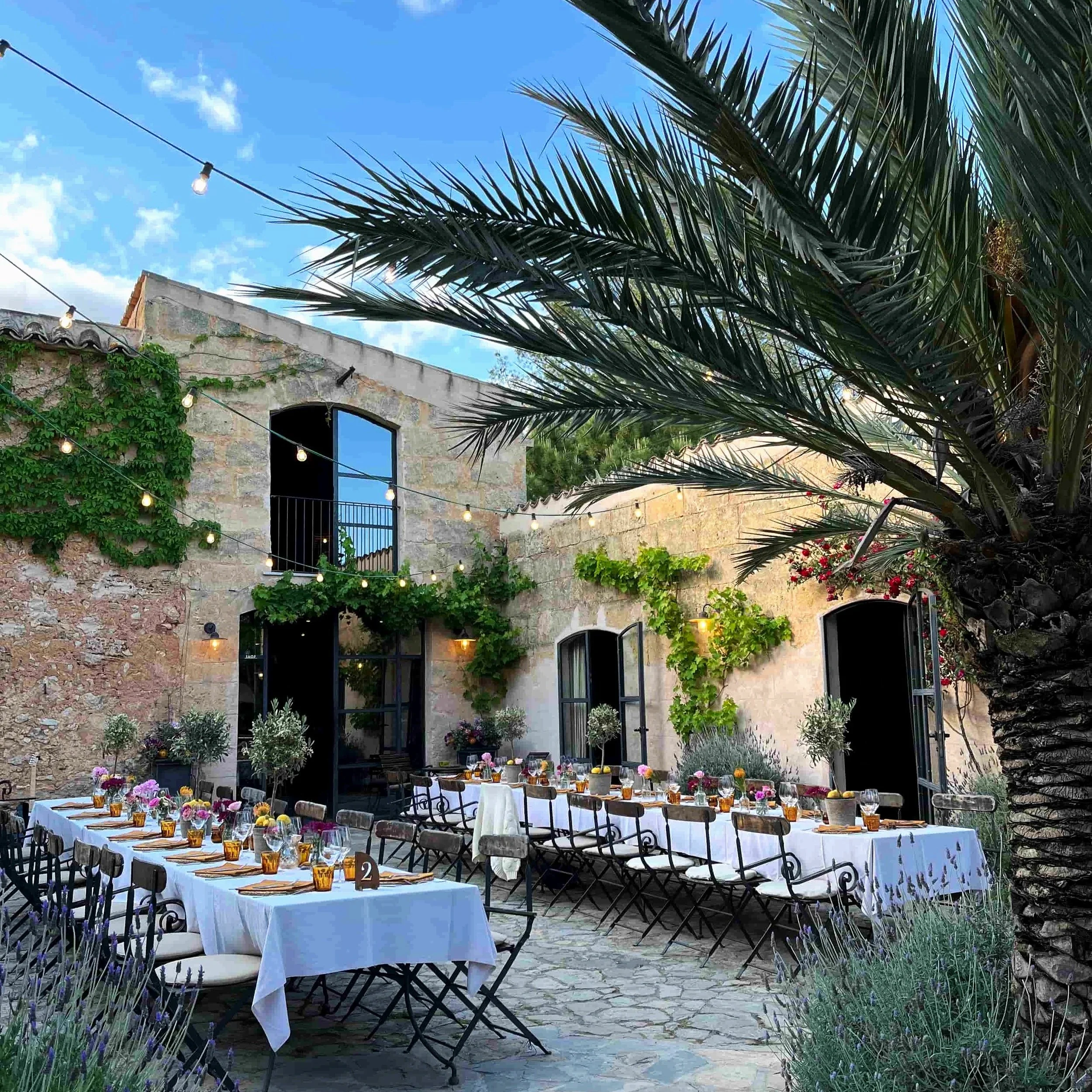
This is why the location of an executive offsite matters more than most companies consider when booking one. A hotel conference room in a familiar city does not interrupt those patterns. It continues them, in a slightly different room. What breaks the cycle is a genuine change of environment: one the nervous system does not associate with operational pressure, and one that actively works in the other direction.
The numbers behind disengagement
Gallup's State of the Global Workplace 2025 report found that global employee engagement has fallen for the second consecutive year, reaching just 21%, its lowest point in nearly a decade. The estimated cost of that disengagement: $10 trillion in lost productivity every year, roughly 9% of global GDP.
The same report found something more specific and more actionable: manager engagement fell to 22% in 2025, down five points in a single year. And manager wellbeing is one of the strongest predictors of team engagement. When leaders are running on depleted reserves, accumulated pressure and insufficient recovery, teams feel it. Not always immediately in the numbers. But in the quality of decisions. In the friction that builds when people are not genuinely aligned. In the conversations that never happen because no one has the bandwidth for them.
This is not a problem that resolves itself between quarters. It does not respond to a day-long workshop, however well designed. The conditions that create it require a different kind of intervention: genuine, immersive distance from the environment where those conditions have built up.
The corporate response to these numbers is already shifting. Wellbeing has moved from an HR line item to a board-level conversation, with companies across technology, finance and professional services increasing investment in leadership health as a direct business lever. For technology companies in particular, the logic is unusually clear: teams that spend eight to ten hours a day in front of screens, in high-urgency, notification-driven environments, do not recover by spending the weekend in a slightly different chair. The body and mind need a complete change of input. Mallorca, for a team arriving from London, New York or Amsterdam, provides exactly that.
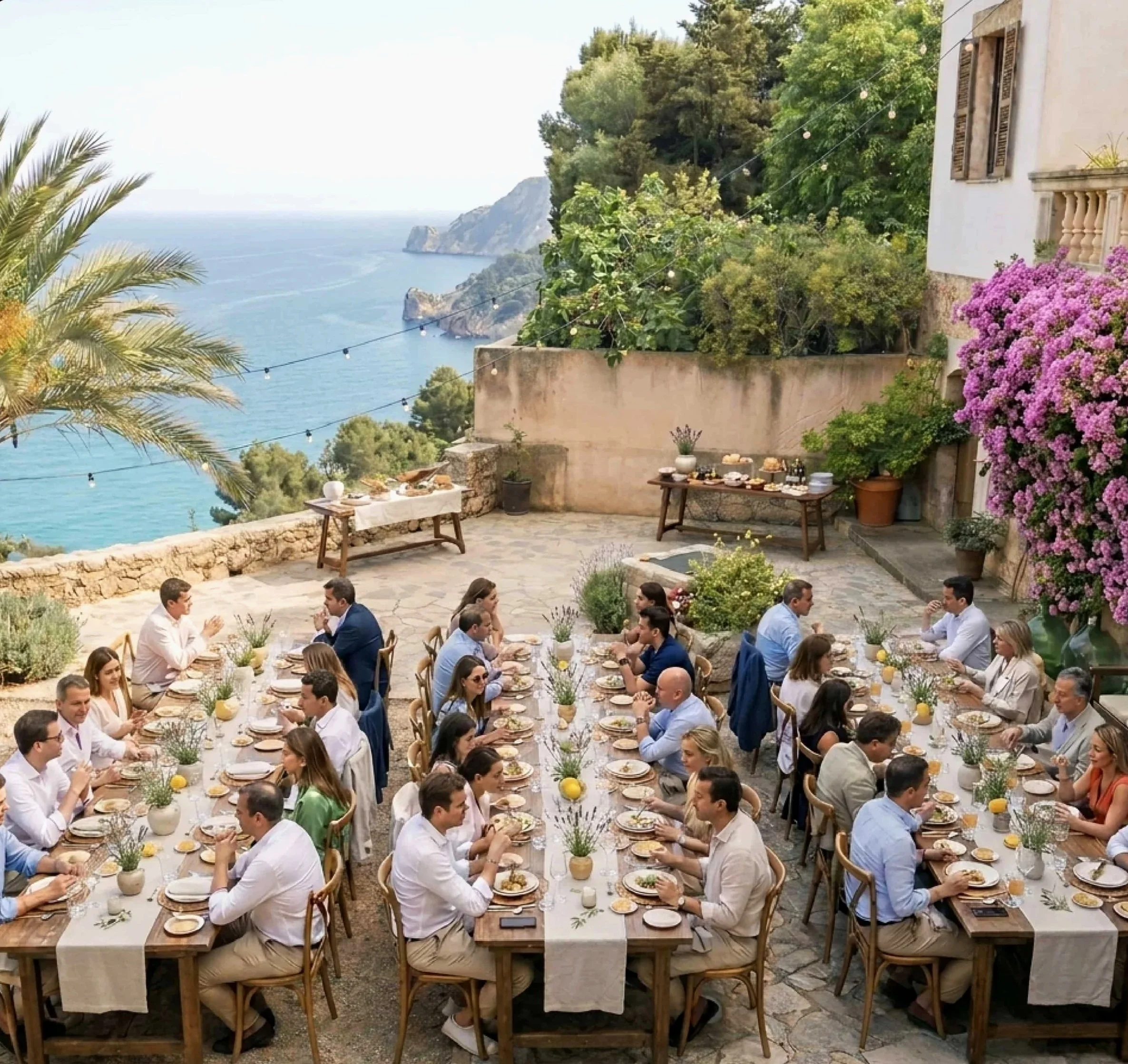
Investing in a properly produced executive retreat is, among other things, an investment in the quality of leadership thinking at the moments when that thinking matters most. Research on workplace wellbeing consistently finds meaningful returns for companies that take this seriously: reduced absenteeism, stronger retention, and measurably better decision-making at leadership level.
Why environment is not a backdrop, it is a variable
There is a body of research in environmental psychology and behavioural science that reaches a consistent conclusion: the physical setting in which people think together shapes what they are capable of thinking. Genuine mental recovery requires environments that engage attention without demanding it. A walk along a coastal path at dawn. The view from a hillside over the sea. The quiet of an interior courtyard in the early morning. These are not aesthetic preferences. They are the conditions under which the brain's executive functions, the parts responsible for strategic thinking, creative problem-solving and considered judgement, can actually work at their best.
The role of physical activity within a retreat programme is functional, not recreational. Research in occupational and brain health science increasingly frames movement as a strategic business imperative: physical activity improves executive function, sustained attention, cognitive flexibility and decision-making quality: the precise capacities that leadership demands and that sustained sedentary work quietly erodes. A 2024 review in Discover Psychology found that acute physical activity also significantly enhances creative and divergent thinking, with the strongest effects in novel environments that involve challenge and engagement. A morning hike through the Serra de Tramuntana, a session on the water, a team activity that requires coordination and presence: these are not ways to fill time between work sessions. They are how the brain is prepared for the strategic thinking that follows. Movement changes the neurochemistry. The thinking that happens afterwards is genuinely different.
A leadership team removed from the conditions producing their stress, placed in a setting that is genuinely novel and naturally restorative, and given a rhythm that alternates between physical activity, structured work and real recovery, tends to produce a different quality of output from the same team sitting in a room they associate with the problems they are there to solve. The conversations go somewhere different. The thinking moves.
The setting of a corporate retreat is not a perk added to the programme. It is part of the strategic logic.
Why Mallorca works for leadership teams
Mallorca sits at an unusual intersection of environmental, cultural and logistical factors that make it particularly well-suited for executive retreats with serious intent.
It is accessible. Direct flights from London, Amsterdam, Frankfurt, Stockholm, Copenhagen and most major Northern European hubs, with manageable connections from New York, Toronto and other North American cities, mean that an international leadership team can arrive without significant travel disruption. The island is small enough that within an hour of landing, the team can be at a possessió in the interior or a property in the Serra de Tramuntana, already in a completely different world.
The environment works on a biological level. The quality of light in Mallorca is not a detail for the brochure. Morning light here carries a different spectrum from what people working in northern offices and northern latitudes typically experience, and it contributes to sleep regulation and mood in ways that accumulate over a few days in ways most people notice. The food culture, built on olive oil, fish and seasonal produce from the island's markets and farms, supports sustained mental energy differently from standard hotel catering. And the quality of silence in Mallorca's interior, the genuine absence of urban noise, constant connectivity and the background pressure of familiar environments, is something most people begin to feel within hours of arriving.
Every season offers something different, and all of them work for a corporate retreat. Spring and autumn bring ideal conditions for outdoor work, with the island at a pace that invites people to slow down without feeling remote. Summer offers long evenings and the sea at its warmest. Winter, often overlooked, can be the most powerful season of all: the island is quiet, the light is clear and low, and there are almost no distractions.
Mallorca also has a serious and quiet community of professionals: facilitators, movement practitioners, bodywork specialists, guides with deep knowledge of the landscape and the culture. This network is not available through a standard booking platform. It is available through the kind of curation that comes from knowing the island well and having worked within it over time.
What a corporate retreat in Mallorca actually includes
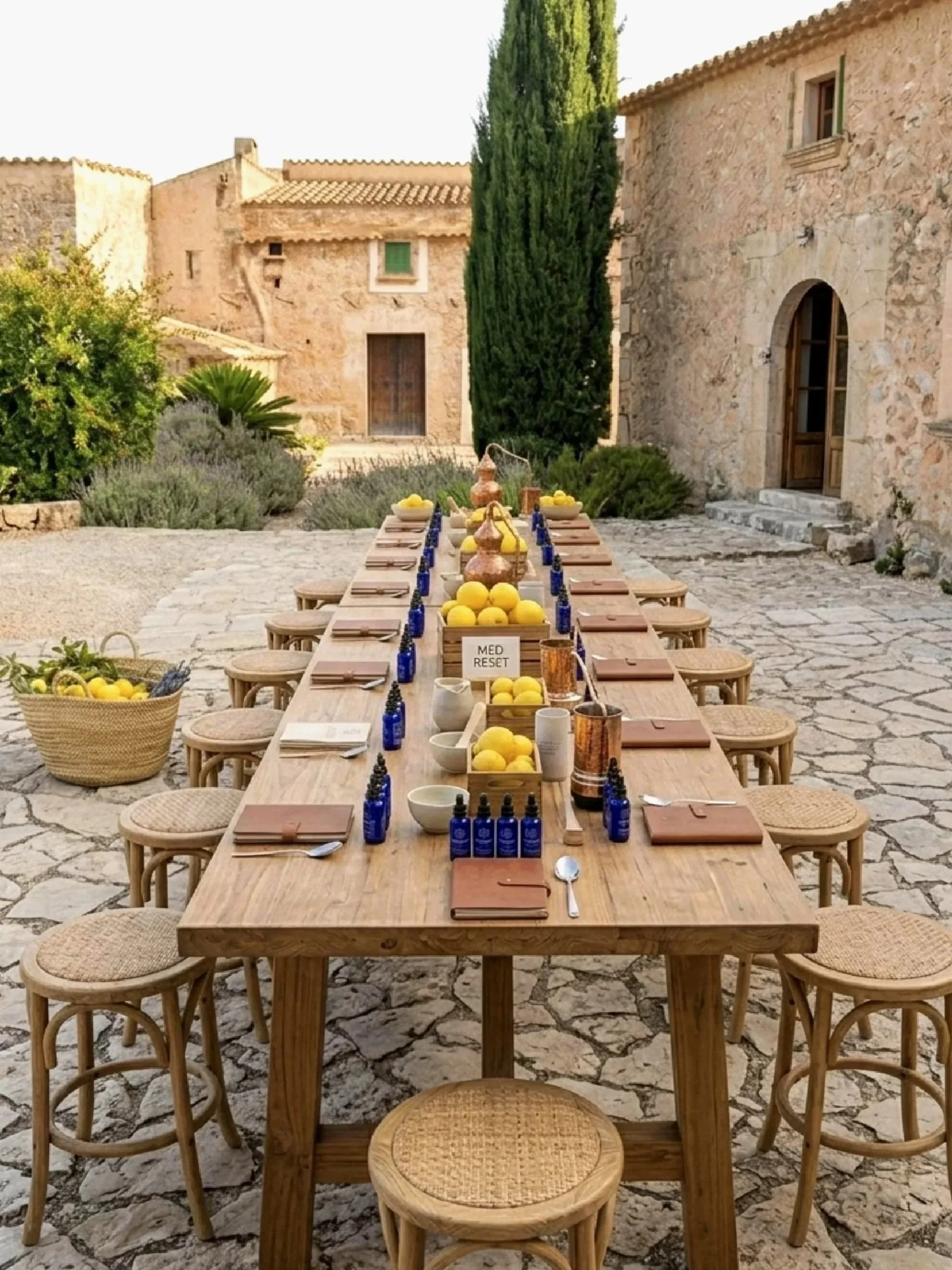
Every team comes with a different situation. The design of a retreat begins with understanding what that is.
Some leadership groups need to make a significant strategic decision and want the environment to support that process. Others have been through a difficult period and need to rebuild trust and genuine alignment before they can move forward effectively. Some are at a growth inflection point and need real, uninterrupted thinking time together. Others know simply that the team has not had proper time together in too long, and that this has started to show in ways that are hard to name but easy to feel.
The process at Med Reset starts before anyone boards a plane.
Before arrival. A detailed conversation about where the team actually is: what has been hard, what the dynamic is, what the work requires, and what recovery looks like for this particular group. From that conversation, the programme is built. Not from a catalogue of available sessions, but from what this team needs, in this order, at this pace.
The setting. In Mallorca, the right environment depends entirely on what the team needs to produce. For groups that need silence, distance and space to think, a private rural property in the island's interior, whether a traditional possessió, a boutique agrotourism estate or a private villa set among olive groves and almond trees, provides that: land to walk, genuine quiet and the kind of absence of distraction that most people have not experienced in years. For groups that need physical decompression and activation before they can engage strategically, a property with direct sea access opens up a different palette: open water swimming, coastline walks at dawn, mornings on the water that reset the nervous system in a way a hotel gym does not. For longer retreats, moving between an interior property and a coastal setting can serve the programme well, using the different quality of each environment to move the group through different states of work and recovery. The setting is never determined by what happens to be available. It is selected as part of the design.
The rhythm. A programme that leaves space for informal conversation, a walk before the morning session, a meal that goes where it goes, tends to produce more genuine alignment than one that runs back-to-back from nine to six. The unstructured time is not a gap in the programme. It is where much of the actual work happens: the conversations that emerge on a walk, the trust that builds at a long table, the clarity that arrives when no one is asking anything of you.
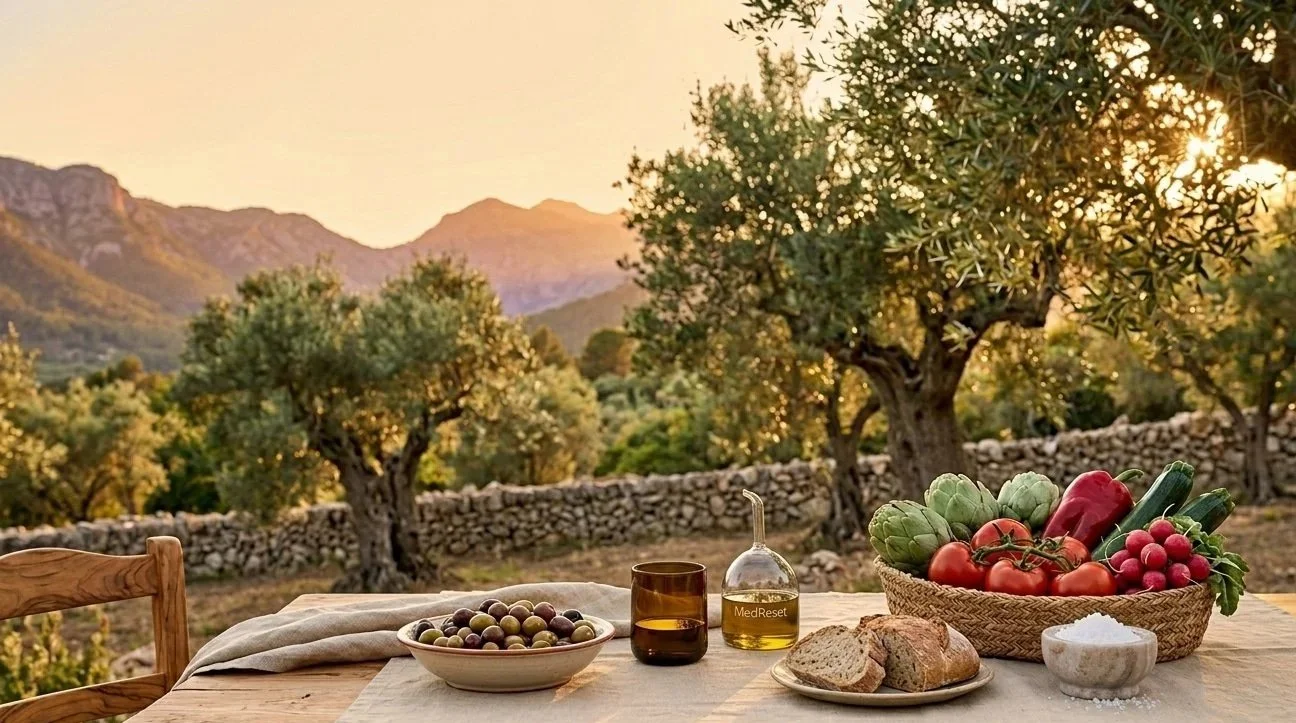
The food. In Mallorca, eating well means eating with the island. Farmers markets, small producers, kitchens that have been cooking with the same local ingredients for generations. A retreat that connects a leadership team with that food culture adds something a catered hotel environment rarely does. Shared meals become part of how people reconnect, not a break between sessions.
The people. When external facilitation is part of what the team needs, the practitioners involved are chosen for what this group is working on, not for their availability. When the team needs space more than structure, the programme reflects that. What remains constant is that the logistics are entirely invisible, so the people who are there can give their full attention to what they came to do.
The difference between in-office wellness and an immersive retreat
There is a growing category of workplace wellbeing that focuses on bringing wellness practices into the office environment: movement classes, breathwork sessions, mental health workshops. These have real value for the teams that have access to them.
But there is a distinction worth understanding clearly. In-office programmes work within the existing conditions. An immersive retreat removes the team from those conditions entirely.
For a team at a critical inflection point, for a leadership group that needs to rebuild trust and alignment, for executives who have been operating at high intensity for too long and need to genuinely recover before the next phase of decisions, that removal is not a luxury. It is what makes the work possible. You cannot reset a system that is still inside the conditions producing the pressure. You cannot access the quality of strategic thinking a business needs at critical moments by rearranging the furniture.
Mallorca, in the right setting and at the right pace, creates the distance that makes real recovery and real clarity achievable. Not as an escape. As the condition for the work.
Who this is for
Med Reset produces corporate retreats and executive offsites across a range of group sizes and formats.
Leadership and executive teams of between four and twelve people are the most common format: intimate enough for honest conversation, strategic enough to move something significant. Two to four days, built around a specific question or transition. This is the format that tends to produce the deepest alignment.
Team retreats and company offsites for groups of twenty to one hundred people are a different kind of production, and require a different kind of design. The challenge is creating an experience that feels personal at scale: where a larger group can genuinely connect, reset and move in the same direction, rather than simply spending time in the same place. Mallorca is well suited to this. The island's combination of private estate properties, outdoor settings and experienced local network makes it possible to produce something that feels meaningful for a group of fifty in a way that a hotel conference venue cannot.
In every case, the starting point is the same: a clear understanding of where the group is, what the work requires, and what the experience needs to produce. The scale changes. The approach does not.
It works for companies at a growth stage that requires the leadership team to be fully aligned and operating at their best. For organisations going through significant change, a merger, a restructuring, a new phase of expansion, where the quality of collective thinking will directly shape the outcome. And for teams that have simply been working at high intensity for long enough that the accumulated cost has started to show in how they make decisions and how they work together.
